When a cult 1980s vampire film like The Lost Boys hits the Broadway stage, expectations run high—nostalgia looms large, but so does skepticism. The stage adaptation of Joel Schumacher’s genre-blending teen horror-comedy has arrived with electric guitars, fog machines, and a neon-soaked aesthetic. But what do the critics actually think?
Early reviews paint a vivid, sometimes divided picture. While some praise the show’s bold aesthetic and energetic performances, others question whether a story rooted in 80s camp can sustain a full Broadway run. From The New York Times to Variety, here’s a deep dive into how critics are responding to The Lost Boys on Broadway.
A Stylish but Uneven Ride, Critics Say
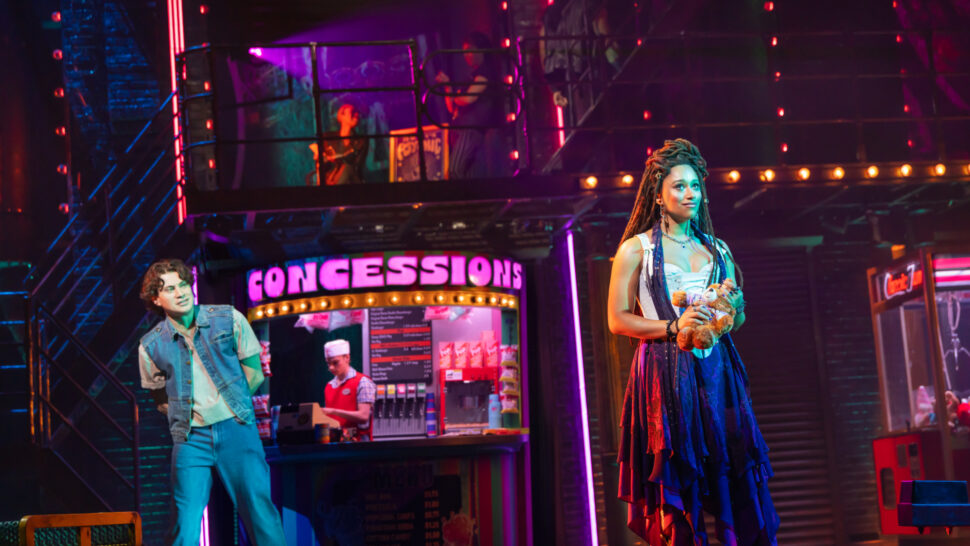
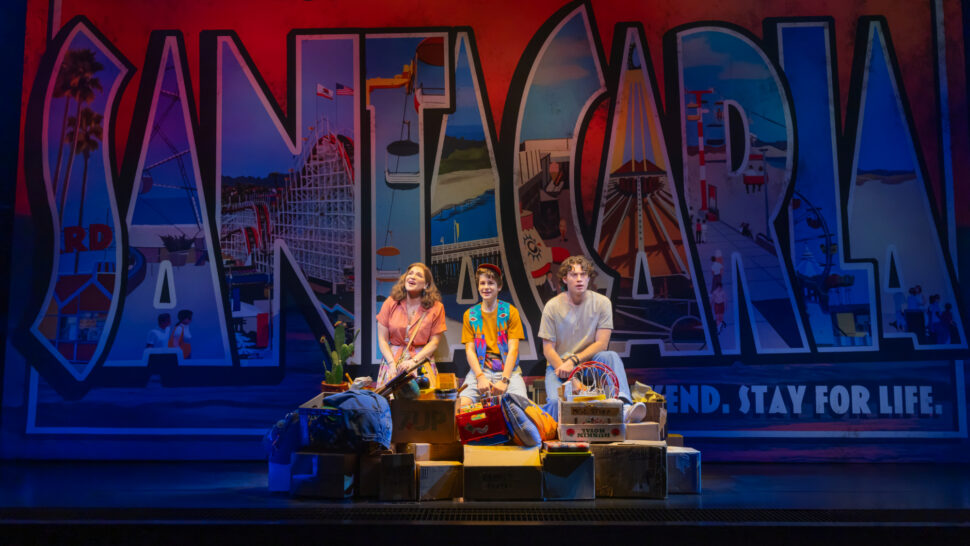
Most critics agree: The Lost Boys delivers style in spades. The production design—a neon-drenched Santa Carla boardwalk complete with rollerblades, comic book shops, and vampire lairs—is widely celebrated. Jesse Green of The New York Times calls it “a visual feast, dripping with retro-gothic flair,” while Deadline’s Jeremy Gerard praises “a stage world so immersive, you half expect to smell cotton candy and blood.”
But beneath the aesthetics, cracks appear. Green notes that “the musical’s energy often outpaces its emotional depth.” The score, composed by indie rocker Courtney Love in her Broadway debut, is described as “loud, urgent, and occasionally brilliant”—but inconsistent. Vulture’s Sara Holdren writes: “When the music leans into punk rage, it soars. When it tries to be tender, it stumbles.”
The book, adapted by screenwriter Akiva Goldsman, attempts to honor the film’s tongue-in-cheek tone while adding new emotional layers. Some critics find this balancing act clumsy. “The show can’t decide if it wants to be a satire, a tragedy, or a coming-of-age story,” observes The Hollywood Reporter. “Too often, it tries to be all three at once.”
Performances Shine Amidst Narrative Gaps
Casting has proven to be one of the production’s strengths. Finn Wittrock stars as David, the charismatic leader of the vampire clan, delivering what Variety calls “a hypnotic, seductive performance that chills and thrills in equal measure.” His vocals on the show-stopping “Crimson Moon” are singled out as a highlight.
Jamie Brewer, in the newly expanded role of Lucy, brings unexpected gravitas. Critics praise her rendition of “Mother’s Curse,” a new ballad exploring grief and maternal fear. “Brewer transforms what could have been a stock character into the show’s moral anchor,” notes Time Out New York.
Meanwhile, the younger cast members—particularly Noah Galvin as Michael and Milo Manheim as Sam—capture the film’s teenage angst with authenticity. Galvin’s performance in the transformation sequence, where he grapples with his descent into vampirism, draws consistent acclaim. “It’s rare to see a physical performance so precisely convey internal conflict,” writes The New Yorker.
Yet not all performances land. The comedic timing of the comic-relief duo, Edgar and Alan Frog (played by drag performers Peppermint and Jinkx Monsoon), divides critics. While Entertainment Weekly calls their campy energy “a welcome jolt,” others find their modern references and meta-humor jarring. “The Frogs feel like they wandered in from a different, more self-aware show,” says Broadway News.
Is the Music a Strength or a Liability?
The score has become one of the most debated elements. Courtney Love’s rock-heavy, emotionally raw compositions mark a stark departure from traditional Broadway fare. Tracks like “Blood Runs Cold” and “Forever Young” lean into grunge and industrial rock, energizing younger audiences but alienating some theater purists.
The Guardian’s review captures the divide: “Love’s music is brave, messy, and unapologetically loud. It may not be for everyone, but it’s never boring.” Conversely, The Wall Street Journal laments, “This isn’t a musical score—it’s a concert with dialogue grafted on.”
Still, standout numbers emerge. “Lost Without You,” a duet between Michael and Star (played by Solea Pfeiffer), is widely praised for its vulnerability and melodic strength. “It’s the one moment the show slows down and lets the characters breathe,” says Rolling Stone. “You feel the love, the fear, the danger.”
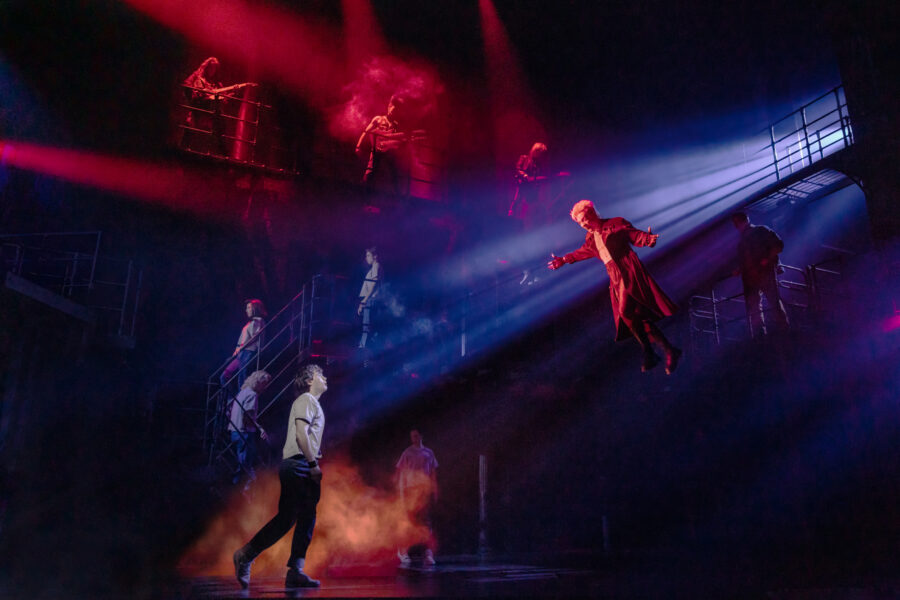
Dance and choreography, handled by hip-hop innovator Rennie Harris, receive near-universal acclaim. The vampire transformations—synced with strobe lighting and rhythmic ensemble movement—are described as “visually hypnotic” and “kinetically thrilling.” Dance Magazine calls the choreography “a masterclass in storytelling through movement.”
Faithfulness vs. Innovation: Where Does the Show Stand?
Adapting a beloved cult film invites inevitable comparisons. Critics are split on whether The Lost Boys honors the original or strays too far.
Fans of the movie appreciate the faithful touches: the iconic line “You fill up my senses” is preserved, the comic book motif runs throughout, and the final showdown retains its frenetic energy. “They didn’t just adapt the film—they resurrected it,” writes Screen Rant.
But some changes spark controversy. The addition of a queer subtext between David and Michael is lauded by some as a “long-overdue expansion,” while others see it as an unnecessary modernization. “The tension was always there,” argues Out Magazine, “but making it explicit changes the dynamic in ways the script doesn’t fully support.”
The show also deepens the backstory of the vampire hierarchy, introducing a fallen elder council and a prophecy about a “Daywalker.” While this adds mythological weight, critics like The Atlantic argue it “overcomplicates a story that thrived on simplicity.” “The original worked because it was a metaphor for teenage rebellion,” the review notes. “Now it’s trying to be Twilight with better music.”
Box Office Buzz and Audience Reactions
Despite mixed critical reception, audience reactions tilt positive. On Broadway forums and social media, younger theatergoers praise the show’s energy, visual style, and modern edge. “It’s not your grandma’s musical,” posted one Reddit user. “It’s loud, weird, and kind of amazing.”
Ticket sales remain strong, particularly for weekend performances. The show’s marketing—featuring glowing fangs, pulsing synth trailers, and influencer-led “vampire nights”—has successfully tapped into Gen Z and millennial nostalgia.
Still, older audiences appear less enchanted. At intermission talk and post-show surveys, some longtime theatergoers express confusion over the genre mashup. “I came for a musical,” one attendee told Playbill, “but it felt more like a rock opera with a plot.”
Final Verdict: A Divisive but Daring Experiment So, what do the critics ultimately think?
The Lost Boys on Broadway is not a universally acclaimed triumph. It’s not even a clear-cut success by traditional Broadway standards. But it is undeniably bold.
Critics recognize the show’s ambition. It dares to reimagine a cult film with punk aesthetics, diverse casting, and a genre-defying score. It pushes boundaries in choreography, design, and narrative tone. For that, it earns respect—even from those who don’t love it.
As New York Magazine puts it: “This isn’t the best musical of the season. But it might be the most interesting.”
For fans of the original film, the stage version offers enough nostalgia to satisfy—but also enough reinvention to surprise. For theater traditionalists, it may feel jarring or uneven. But for those open to innovation, The Lost Boys delivers a thrilling, if flawed, night at the theater.
Should You See It? A Critic-Informed Guide
Based on critical consensus, here’s how to decide:
- See it if: You love the original film, appreciate bold stage design, or enjoy rock-driven musicals.
- Skip it if: You prefer classic Broadway storytelling, subtle performances, or coherent narratives over spectacle.
- Bring a friend who: Loves vampire lore, enjoys cult cinema, or wants a visually immersive night out.
- Go for: The production design, Finn Wittrock’s performance, and the choreography.
- Temper expectations for: Emotional depth, lyrical subtlety, and narrative cohesion.
In short: The Lost Boys isn’t for everyone. But for the right audience, it’s a wild, unforgettable ride.
Closing Note: The Future of Cult Adaptations on Broadway
The Lost Boys may not set a new gold standard for stage adaptations—but it signals something important. Broadway is evolving. The success of shows like Beetlejuice, American Psycho, and now The Lost Boys suggests that audiences are hungry for darker, edgier, and more genre-bending stories.
Critics may remain divided, but their attention confirms one thing: when done with vision and courage, even a vampire teen movie can earn a spotlight on the Great White Way.
Whether The Lost Boys earns lasting reverence or fades into cult footnote status will depend on time, word of mouth, and future revivals. But for now, one verdict stands clear: it’s impossible to ignore.
What do top critics say about The Lost Boys on Broadway? Most agree it’s visually stunning and daring, but divided on whether its narrative and music match its ambition.
Is The Lost Boys musical similar to the original movie? It retains key scenes and dialogue, but expands character backstories and adds new themes like queer subtext and vampire mythology.
Who are the standout performers in the show? Finn Wittrock as David and Jamie Brewer as Lucy receive the most praise for their intense, emotionally layered performances.
How is the music received by critics? Courtney Love’s rock-heavy score is polarizing—hailed as bold and raw by some, criticized as overwhelming and inconsistent by others.
Is The Lost Boys appropriate for younger audiences? Despite its teen themes, the show includes strong language, violent imagery, and mature themes—recommended for ages 15+.
Does the stage version improve on the film? Some critics say it deepens emotional stakes; others argue it overcomplicates a story that worked because of its simplicity.
Should theater purists see The Lost Boys? Only if they’re open to experimental formats. It’s less a traditional musical and more a rock-infused theatrical experience.
FAQ
What should you look for in Critics Weigh In on The Lost Boys on Broadway? Focus on relevance, practical value, and how well the solution matches real user intent.
Is Critics Weigh In on The Lost Boys on Broadway suitable for beginners? That depends on the workflow, but a clear step-by-step approach usually makes it easier to start.
How do you compare options around Critics Weigh In on The Lost Boys on Broadway? Compare features, trust signals, limitations, pricing, and ease of implementation.
What mistakes should you avoid? Avoid generic choices, weak validation, and decisions based only on marketing claims.
What is the next best step? Shortlist the most relevant options, validate them quickly, and refine from real-world results.